Reading the Urovance Label: The 17-Ingredient Blend, the Struck-Through Copper Line, and What Isn't Printed
Quick Answer: What Does the Urovance Label Actually Disclose?
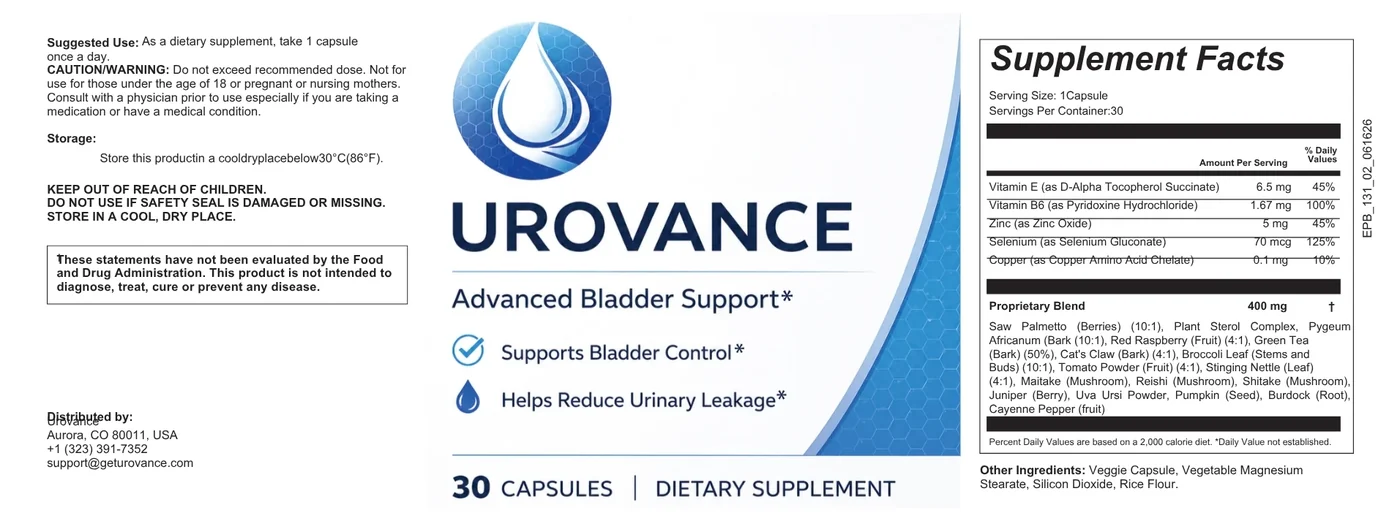
The printed Urovance Supplement Facts panel discloses four vitamins and minerals with exact milligram amounts and percent Daily Values — Vitamin E, Vitamin B6, Zinc and Selenium — plus a fifth line, Copper at 0.1 mg (10% DV), that is visually struck through on the label image for reasons the label does not explain. Below those five lines sits a single 400 mg Proprietary Blend containing 17 named botanicals, mushrooms and minerals in descending order by weight, with no individual amount printed for any of them. That structure, not the front-of-bottle marketing copy, is what this page works through.
- Five dosed lines: Vitamin E, Vitamin B6, Zinc, Selenium, and a Copper line marked as struck through.
- One blend total: 400 mg shared across 17 named ingredients, no per-ingredient amounts.
- One open question: whether the struck-through Copper is actually in the capsule.
What this article is, and isn't
This is a read of one specific supplement facts panel — the one printed on the Urovance bottle — not a general review of prostate or bladder ingredients, and not a verdict on whether the product works. Every figure below comes from the printed label itself. Where the label doesn't say something, that is stated plainly rather than filled in with a guess, because a proprietary blend and an ambiguous strikethrough are exactly the two places where guessing does the most damage to an honest read.
Urovance's own front-of-bottle claims — "Advanced Bladder Support," "Supports Bladder Control," "Helps Reduce Urinary Leakage" — sit above this panel, not inside it. Those phrases are structure/function claims, a labeling category the FDA allows without pre-approval as long as they carry an asterisk pointing to the standard disclaimer. They are a separate topic from what follows; see our companion piece on the label's claims versus the marketing graphics for that comparison. Here, the subject is only the Supplement Facts box itself.
Serving size and the four dosed nutrients
The panel's basics: one capsule is the serving size, and a 30-capsule bottle supplies thirty servings, one a day for a month. Above the blend line sit four nutrients with individually printed milligram or microgram amounts and percent Daily Values calculated against a 2,000-calorie reference diet:
- Vitamin E (as D-Alpha Tocopherol Succinate): 6.5 mg, 45% DV
- Vitamin B6 (as Pyridoxine Hydrochloride): 1.67 mg, 100% DV
- Zinc (as Zinc Oxide): 5 mg, 45% DV
- Selenium (as Selenium Gluconate): 70 mcg, 125% DV
These four lines are the only part of the entire panel where a dose can be checked against anything — a Daily Value, an upper intake level, or a study's dosing arm. We work through what each of those four doses actually means, with the primary research, in our companion breakdown of Urovance's dosed micronutrients. This piece stays focused on what the panel's structure discloses and hides.
The Copper line: what the strikethrough does and doesn't tell you
Directly below Selenium sits a fifth mineral line: Copper (as Copper Amino Acid Chelate), 0.1 mg, 10% DV. On the label image, that single line carries a visible strike-through mark running through the text — a mark none of the other four nutrient lines, and none of the 17 blend ingredients, carry.
The label supplies no footnote, asterisk or explanatory text tied to that strikethrough. It could plausibly mean several different things: a formulation change where Copper was removed from a later production run but the old artwork wasn't fully updated; a proofing mark from the label's design file that was never meant to print; or something else entirely. Nothing on the panel, the front of the bottle, or the seller's sales page resolves which of these is correct, and no independent source we could locate addresses it either.
The honest position, and the one this page takes, is that Copper's inclusion in Urovance is unverified. We do not state Copper as a confirmed ingredient, and we do not state it as confirmed absent. If you have a copper sensitivity, Wilson's disease, or a condition where copper intake matters to you, that ambiguity itself — not a specific number — is the fact worth telling a physician or pharmacist before you rely on this product.
One thing worth knowing in general: small amounts of copper are sometimes paired deliberately with zinc on a label, because sustained high zinc intake is a recognized cause of copper deficiency through competition for the same intestinal transport pathway[1]. A 5 mg zinc line next to a (disputed) 0.1 mg copper line is the kind of pairing a formulator makes with that interaction in mind — which is exactly why the strikethrough is worth noticing rather than skipping past.
Read the panel before you decide
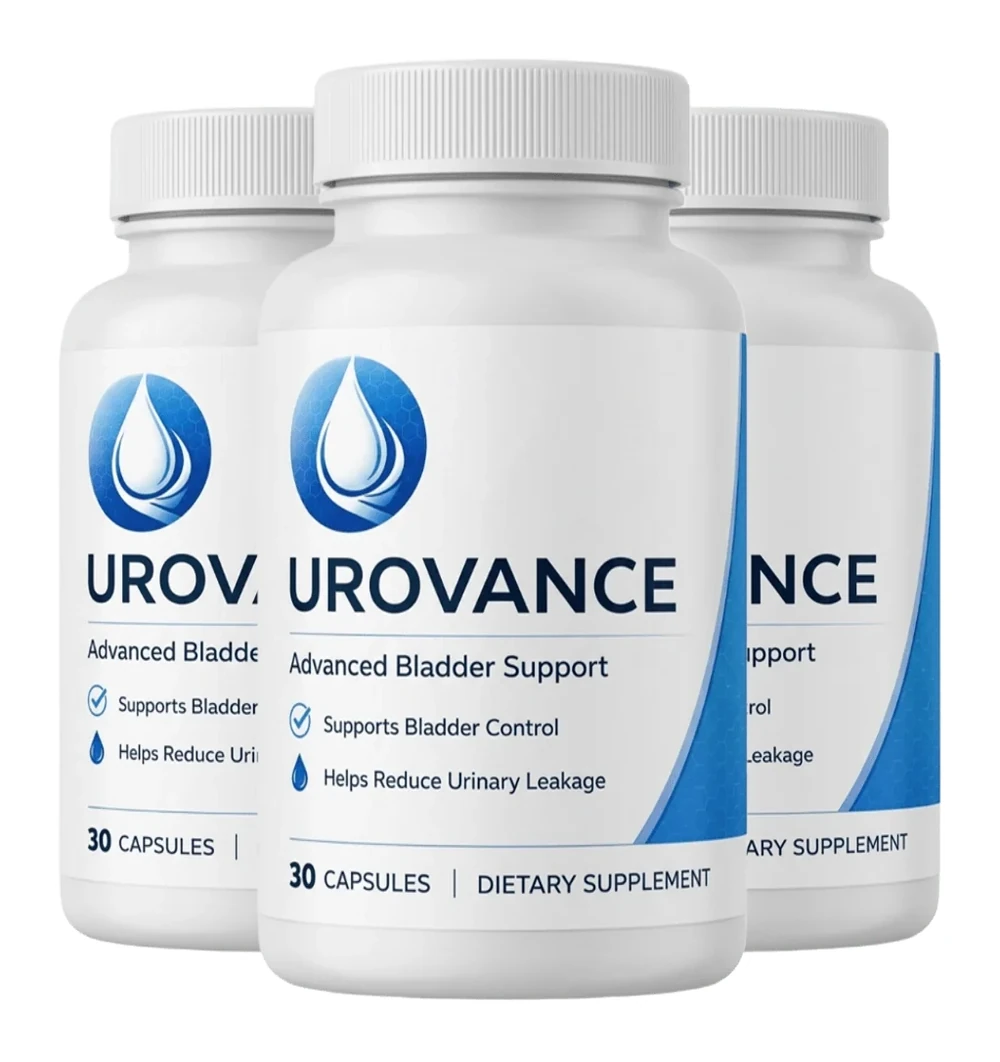
The Supplement Facts box is the only part of any listing that has to be accurate. Look at Urovance's own panel for yourself before you order.
Order UrovanceThe 400 mg Proprietary Blend: 17 names, one number
Below the four dosed nutrients and the disputed Copper line sits a single ingredient category: "Proprietary Blend, 400 mg," marked with a dagger tied to the footnote "Daily Value not established." Underneath it, in the order printed on the label, are seventeen names:
- Saw Palmetto (Berries) (10:1)
- Plant Sterol Complex
- Pygeum Africanum (Bark 10:1)
- Red Raspberry (Fruit) (4:1)
- Green Tea (Bark) (50%)
- Cat's Claw (Bark) (4:1)
- Broccoli Leaf (Stems and Buds) (10:1)
- Tomato Powder (Fruit) (4:1)
- Stinging Nettle (Leaf) (4:1)
- Maitake (Mushroom)
- Reishi (Mushroom)
- Shitake (Mushroom)
- Juniper (Berry)
- Uva Ursi Powder
- Pumpkin (Seed)
- Burdock (Root)
- Cayenne Pepper (fruit)
That is what "proprietary blend" means in practice on this label: a combined weight and a list of names, in the order that U.S. supplement labeling rules require — descending by weight — with no individual milligram figure for any single item. It is a legal and extremely common labeling choice, not a defect unique to this product. But it changes what you can and cannot responsibly say about the formula.
What a 400 mg total for 17 names actually means
Do the arithmetic honestly and the ceiling becomes clear fast. If the 400 mg were divided evenly across all 17 names, each would average roughly 23.5 mg — and real blends are never divided evenly, so some names almost certainly carry more than that average and others almost certainly carry far less. For comparison, published clinical trials of saw palmetto extract for urinary symptoms have typically used doses in the range of 320 mg per day of the extract alone[2] — a figure that, on its own, would consume Urovance's entire 400 mg blend budget and leave nothing for the other sixteen names. That is not a claim that Urovance's saw palmetto dose is wrong; the label doesn't say what it is, and we are not going to guess. It is a demonstration of why "contains saw palmetto" and "contains a clinically studied amount of saw palmetto" are two very different statements, and only the label can settle which one applies — and this one doesn't say.
What ingredient order does and doesn't prove
Descending-weight ordering is a real rule, so Saw Palmetto and the Plant Sterol Complex, listed first and second, carry at least as much weight as anything below them. That's useful information as far as it goes. What it cannot tell you is the actual amount of the third name, the tenth name, or the seventeenth. A common practice sometimes called "fairy dusting" — including an ingredient at a token amount mainly so it can appear on the front label — is completely invisible from ingredient order alone. Order tells you relative rank; it does not tell you whether rank six is a meaningful dose or a rounding error.
Extract ratios: informative, but only about concentration
Several of the 17 names carry a ratio in parentheses — 10:1 for Saw Palmetto and Pygeum, 4:1 for Red Raspberry, Cat's Claw, Tomato Powder and Stinging Nettle. A ratio like 10:1 means roughly ten parts of raw plant material were processed down into one part of finished extract; it is a concentration figure, not an amount. A 10:1 Pygeum extract is more concentrated, gram for gram, than a 4:1 extract of the same bark, but neither ratio tells you how many milligrams of that extract sit inside the 400 mg total. Green Tea's "50%" is a different kind of figure — a standardization percentage, most commonly referring to a marker compound content — and it also says nothing about the milligram amount actually used. Six of the seventeen names (Plant Sterol Complex, Maitake, Reishi, Shitake, Juniper, Uva Ursi, Pumpkin, Burdock and Cayenne Pepper) carry no ratio or percentage at all.
A 400 mg total is a budget, not a promise. Every name added to the list is another claim against the same fixed number of milligrams, and the label does not say how that budget was split.
Reading the mushrooms and minor names honestly
Three of the seventeen blend names — Maitake, Reishi and Shitake — are mushrooms, listed without a plant part, ratio or standardization. They sit roughly two-thirds of the way down a seventeen-item list behind a 10:1 saw palmetto extract and a plant sterol complex, which under descending-weight ordering means they very likely represent a small share of the 400 mg total. Several others — Juniper (Berry), Uva Ursi Powder, Burdock (Root) and Cayenne Pepper — carry no ratio at all, which on a proprietary-blend label usually (though not always) signals the manufacturer used the raw material or a simple powder rather than a concentrated extract. None of this means these ingredients are absent or worthless; it means the label gives you no way to independently size their contribution, and it is more honest to say so than to describe seventeen botanicals as if each were present at a meaningful, studied dose.
Other Ingredients: the line below the box
Outside the Supplement Facts box, the label lists "Other Ingredients: Veggie Capsule, Vegetable Magnesium Stearate, Silicon Dioxide, Rice Flour." That confirms the capsule shell itself is plant-based (not gelatin), and names two common processing aids — a flow agent and an anti-caking agent — used in tiny amounts to keep the capsule-filling machinery running cleanly. Nothing here is unusual for a botanical capsule product.
What the panel does not tell you, stated plainly
To summarize the honest limits of what a single label, however carefully read, can establish:
- The milligram amount of any one of the 17 blend ingredients — only the 400 mg total is disclosed.
- Whether the ingredient order reflects a formulation built around the better-evidenced names (Saw Palmetto, Plant Sterol Complex, Pygeum) or simply happens to place them first.
- Whether Copper is actually present, given the unexplained strikethrough on that line.
- What the Green Tea "50%" standardization refers to (the label does not name the marker compound).
- Any clinical testing of the finished Urovance formula as a whole — a supplement facts panel discloses composition, not efficacy, and lists individual ingredient research (where it exists) applies to that ingredient studied alone, not to this specific 17-ingredient combination.
None of that is a reason to distrust the label; every one of those points is a routine, disclosed limitation of proprietary-blend formatting under current U.S. rules. It is, however, a reason to read "Proprietary Blend, 400 mg, 17 ingredients" for exactly what it discloses, and not for what a bottle's front-of-pack graphics might imply it discloses.
Medical note: this article describes what is printed on one product's label; it is general information, not medical advice. If you are unsure whether an ingredient, or the unresolved Copper line, matters for your own health, speak with a physician or pharmacist before starting any supplement, especially alongside prescription medication.
Frequently asked questions
What does the 400 mg Proprietary Blend on the Urovance label mean?
It means the label discloses a combined weight of 400 mg for all 17 named botanicals, mushrooms and minerals together, listed in descending order by weight, with no amount given for any single one of them. That is legal under U.S. supplement labeling rules, but it means none of the 17 names can be checked against the dose used in any published study.
Is Copper actually in Urovance?
It is uncertain. The printed Supplement Facts panel lists Copper (as Copper Amino Acid Chelate) at 0.1 mg, 10% Daily Value, but on the label image that line is visually struck through, unlike every other row. Whether that mark is a deliberate deletion of Copper from the formula, a printing artifact, or a production error is not stated anywhere on the label, so it should be treated as an open question, not answered by a guess.
Does ingredient order on a supplement label tell you the amount of each ingredient?
Only in relative terms. U.S. labeling rules require blend ingredients to be listed in descending order by weight, so the first name contributes at least as much as the second, and so on. It does not tell you the actual milligram amount of any ingredient, and with 17 names sharing one 400 mg total, several of them are mathematically likely to be present in very small amounts.
Why doesn't the Urovance label give a percent Daily Value for the Proprietary Blend?
The label marks the Proprietary Blend line with a dagger symbol tied to the footnote "Daily Value not established." That is standard language for a blend of botanicals and mushrooms, because the FDA has not set a Daily Value for most of these ingredients. It does not indicate anything unusual about this particular product; it reflects that no government reference intake exists for saw palmetto, pygeum or the other blend components.
Scientific references
- Brewer GJ, Hill GM, Dick RD, et al. — Interactions of trace elements: clinical significance, Journal of the American College of Nutrition (1985)
- Wilt TJ, Ishani A, MacDonald R, et al. — Beta-sitosterol for the treatment of benign prostatic hyperplasia: a systematic review, BJU International (1999)
- Wilt T, Ishani A, Mac Donald R — Pygeum africanum for benign prostatic hyperplasia, Cochrane Database of Systematic Reviews (2002)
- Tacklind J, MacDonald R, Rutks I, et al. — Serenoa repens for benign prostatic hyperplasia, Cochrane Database of Systematic Reviews (2012)
- NIH Office of Dietary Supplements — Dietary Supplements: What You Need to Know
- U.S. Food & Drug Administration — Dietary Supplement Labeling Guide
See the full panel for yourself
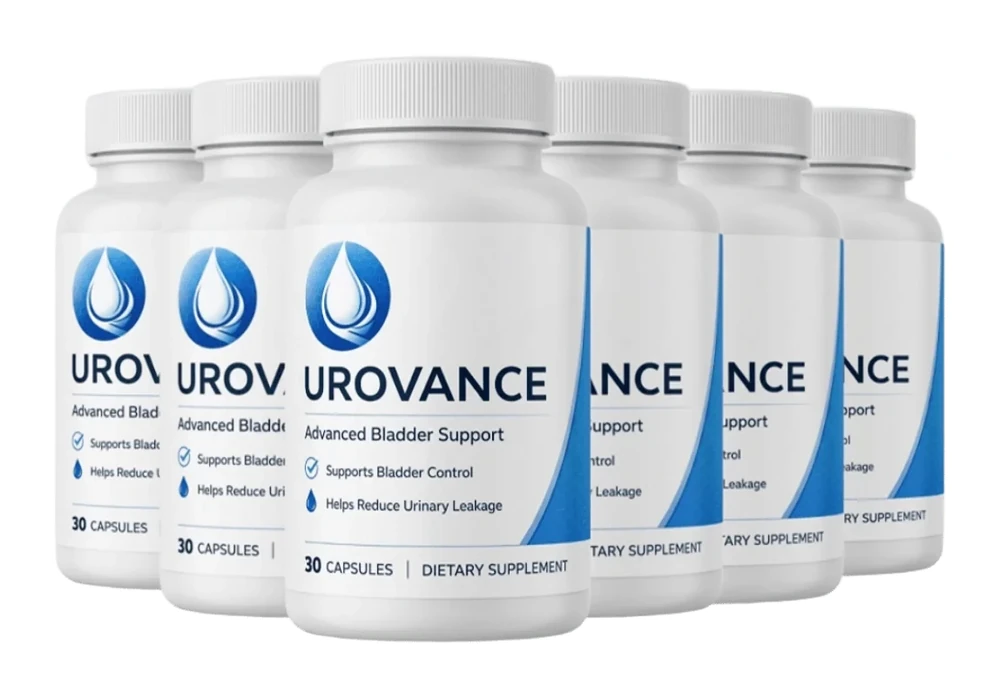
Compare what's printed here against the bottle before you buy, and check our companion breakdown of the four micronutrient doses Urovance does disclose.
Order Urovance